100% Hawaiian Kona Peaberry
Any 4+ bags, mix and match — 10% off at checkout.
Ships frozen, not insulated — it may arrive cool; that’s fine. Refreeze sealed bags.
Why only 4 oz?
So every bag is finished at its best — and you get to taste more. A 4 oz bag is about seven cups, finished inside its peak drinking window instead of fading in a bigger bag. When you order more, it comes as more bags, not bigger ones — a size that puts freshness first, and makes it easy to explore coffees from around the world.
Why frozen?
To preserve the taste of the coffee at its best. You’re buying some of the rarest single-lot coffee in the world, and we want you to experience it the way it tasted at its peak. Each lot is tasted through its rest; on the day it tastes best, it is vacuum-sealed and frozen at −40 °C — stopping the fade in its tracks. Preserved, not improved.
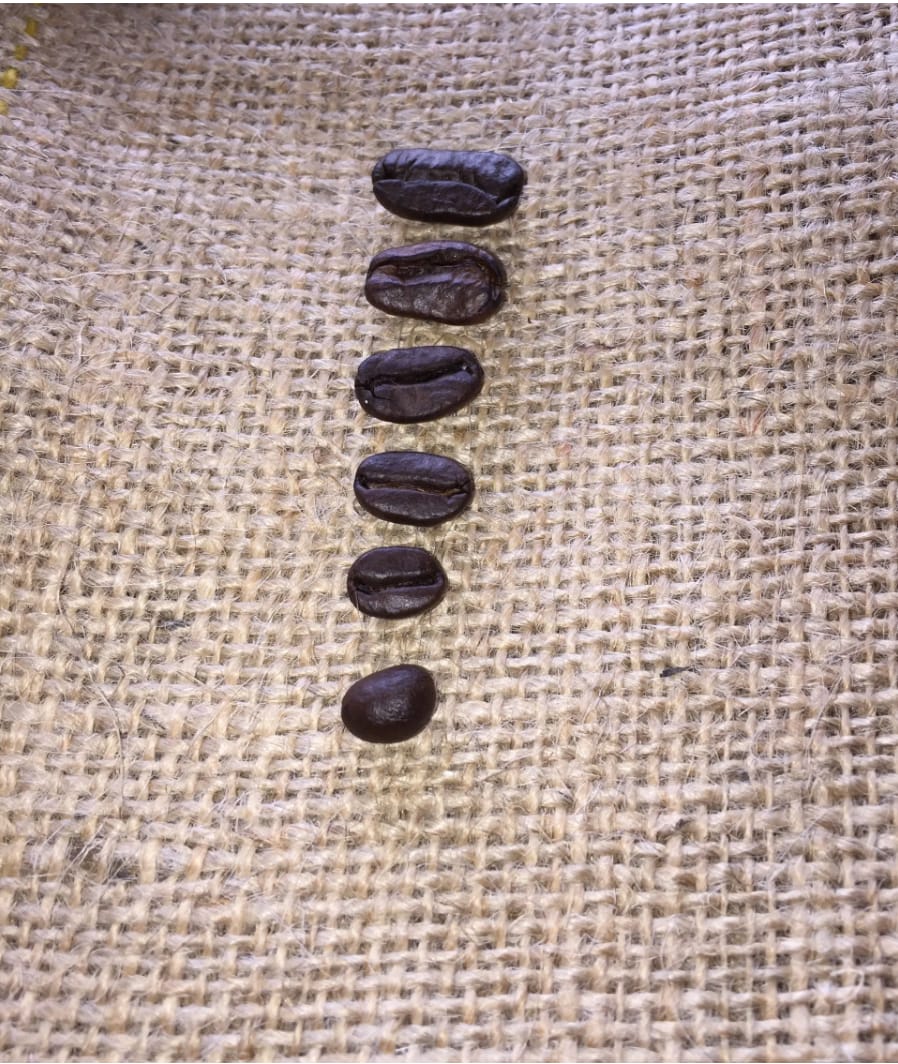
A peaberry forms when a coffee cherry grows one round bean instead of the usual flat pair. No farm can plan for it — it turns up in a small share of any harvest and has to be caught at the mill, screen by screen. Ours is grown on a five-acre family estate above Honaunau, in South Kona, at about 2,200 ft on the slopes of Mauna Loa, where Typica has grown for more than fifteen years. The cherries are picked by hand from July through December, pulped and dried in the sun on the farm, and the round beans are set aside at grading. Roasted in Kona, in small batches, to a medium that keeps the cup lively.
- Country
- Hawaii
- Region
- Honaunau · South Kona
- Varietal
- Typica
- Process
- Washed
- Drying
- Hand-picked & sun-dried
- Elevation
- 2,200 ft
Honaunau · South Kona · Kona Coffee Belt, Island of Hawaii
Frozen coffee is a preservation decision, not a flavor trick.
Why freeze roasted coffee at all?
To let you taste the lot the way it tasted at its best. Roasted coffee peaks about 7–14 days after roasting, then fades as it degasses. We taste each lot through its rest, and on the day it tastes best we vacuum-seal it and freeze it at −40 °C — stopping the fade in its tracks. Your bag is held at the lot’s best day, not its shelf day.
Who roasts it — and why does that matter?
The farm that grew it. The people who pick a coffee understand it best, so each lot is roasted at origin the way the farmer drinks it — not flattened into one uniform house profile. Freezing is how that exact cup reaches you unchanged.
Does freezing hurt the coffee?
No — it preserves it. The bag is vacuum-sealed before the freeze, so there’s no air or moisture in with the beans. You open it at the same point we tasted it: nothing gained, nothing lost to the shelf.
How long does it keep?
Sealed and held at −40 °C, a lot keeps well inside a 12–24 month window — and we sell well inside it. Once your order arrives: refreeze the sealed bag, or keep it sealed at room temperature for 30–60 days. Once open, it’s at its best for 7–14 days. The roast date is printed on the bag.
What happens in transit?
Your order ships frozen straight from the hold — vacuum-sealed, not insulated — so it may arrive cool or thawed. That’s expected and harmless: the vacuum seal is doing the preserving, not the temperature of the truck. Refreeze it, or open it and start the clock.
How this cup reads
A livelier read on Kona. Molasses sweetness cut with apple and lime, a floral lift, and a round, creamy body.